
Field of crosses – We remember

Field of crosses – We remember

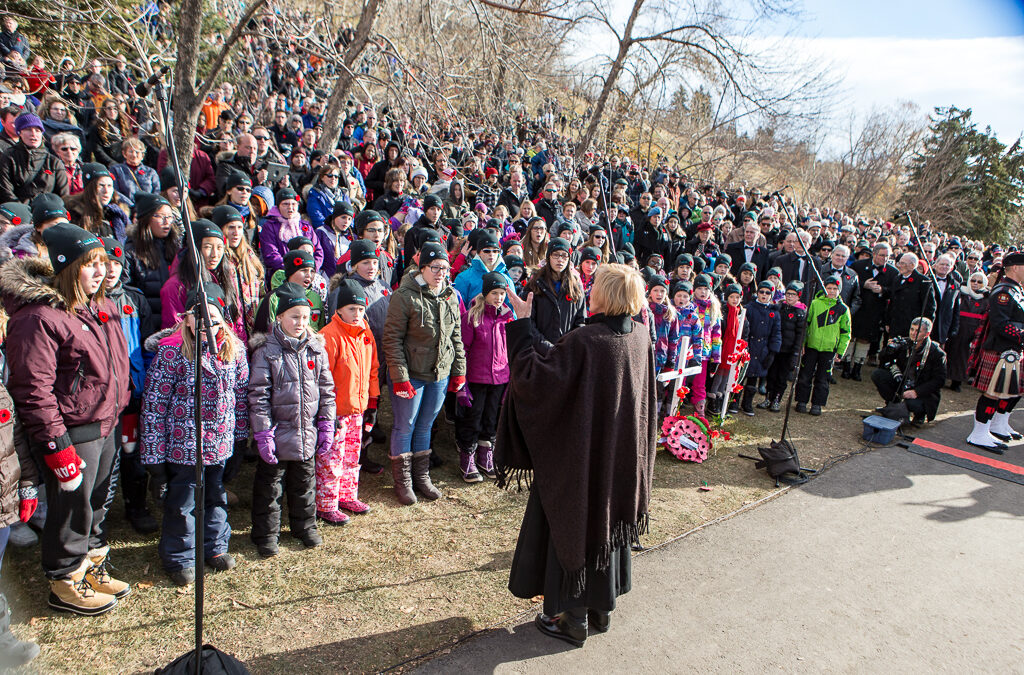
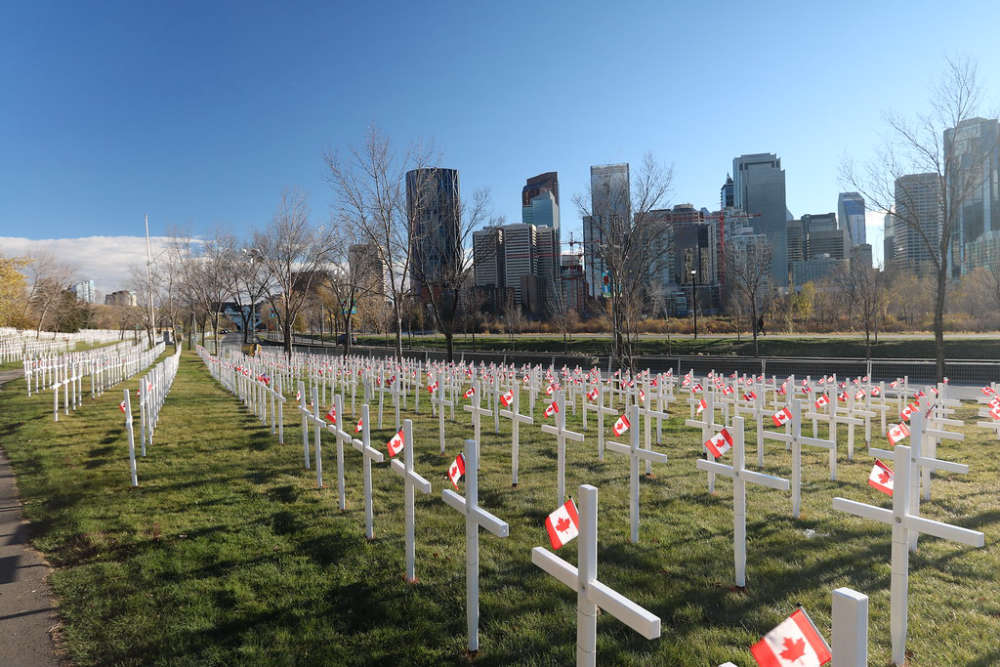
source: cantarechildrenschoir.org date: November 1, 2021 The Field of Crosses Memorial Project is an annual display of white crosses on Memorial Drive in Calgary, Alberta. The display commemorates soldiers from Southern Alberta who lost their lives in service to our...
read more
Calgary students place poppies at Field of Crosses

Calgary students place poppies at Field of Crosses

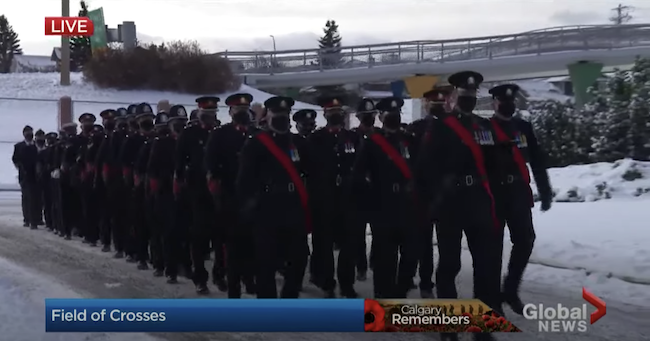
source: www.cjwe.ca date: October 29, 2021 Friday, October 29th, 2021 11:55am The students placed poppies at Field of Crosses ahead of Remembrance Day Students from the Delta West Academy in Calgary volunteered their time to pay tribute to the fallen at the Field of...
read more

Facebook

Comments Box SVG iconsUsed for the like, share, comment, and reaction icons

Today, we are honoured to share the stories of Kevin Dallaire and Bryce Keller, two fallen soldiers who served together and were tragically lost together in Afghanistan.

KELLER Bryce J. MMV SM
Age: 27 – Cpl PPCLI
Date of Death: 03/08/2006

Bryce Jeffery Keller was born on May 27, 1979, in Regina, Saskatchewan. He was the son of Mel and Helen Keller of Calgary, brother of Brad and Scott, and devoted husband of Corporal Sarah Keller.

Bryce joined the Canadian Army Reserve on January 27, 1997. He transferred to the Regular Force on August 18, 2003, and was posted to the 1st Battalion, Princess Patricia's Canadian Light Infantry.

On February 12, 2006, he deployed to Afghanistan with C Company, 1 PPCLI Battle Group, during Operation Archer. Known for his exemplary soldiering skills and strong work ethic, he was promoted to Corporal while on tour on April 21, 2006.

Corporal Bryce Keller was killed on August 3, 2006, during a rocket-propelled grenade attack by Taliban insurgents near Pashmul, southwest of Kandahar City. His platoon was supporting the Afghan National Police when it came under heavy attack. He was one of four Canadian soldiers killed, alongside Corporal Christopher Reid, Private Mark Graham, and Private Kevin Dallaire, only weeks before completing their six-month tour.

Corporal Keller was posthumously awarded the Medal of Military Valour. His citation recognized the courage and leadership he showed under intense enemy fire, allowing his comrades to aid a critically wounded soldier. His selfless actions helped save lives and enabled his platoon to hold vital terrain until reinforcements arrived. He was also posthumously awarded the Sacrifice Medal.

Corporal Bryce Keller was 27 years old. He is buried in the Field of Honour at Sherwood Park’s Glenwood Memorial Gardens in Alberta.

Each November, during the Eleven Days of Remembrance in Calgary, the Field of Crosses commemorates Corporal Bryce Keller and Private Kevin Dallaire.
... See MoreSee Less

Today, we are honour

DALLAIRE Kevin Y R SM
Age: 22 – Pte PPCLI
Date of Death: 03/08/2006

Kevin Yves Royal Dallaire was born in Calgary, Alberta, on September 23, 1983, and was raised in Cold Lake, Alberta. He was the son of Diane and Gaetan Dallaire, both members of the Canadian Armed Forces, and the brother of Private Mikael Dallaire.

Inspired by a family tradition of military service, Kevin enlisted in the Canadian Armed Forces in Calgary in January 2003, shortly after graduating from high school. Throughout his service, he was known for his sharp wit, fearless sense of humor, and unwavering Warrior Spirit. His courage, loyalty, and ability to lift the spirits of those around him earned him the admiration and respect of everyone privileged to serve alongside him.

Private Kevin Dallaire was killed on August 3, 2006, during a rocket-propelled grenade (RPG) attack by Taliban insurgents near the village of Pashmul, approximately 25 kilometers southwest of Kandahar City, Afghanistan. His platoon was supporting the Afghan National Police in clearing a suspected Taliban position when it came under heavy attack from a large force of Taliban fighters. Private Dallaire was one of four Canadian soldiers killed during the fierce battle, alongside Corporal Christopher Reid, Private Mark Graham, and Corporal Bryce Keller. They were only weeks away from completing his six-month tour and returning to Canada.

Private Dallaire’s Citation reads: "Pte Dallaire was deployed with 9 Platoon, C Company, 1 PPCLI Battle Group during Operation ARCHER. On August 3, 2006, during combat operations in the Pashmul region of Afghanistan, he exposed himself to great personal risk to provide cover fire for his section. Traversing an open field under enemy fire, Pte Dallaire directed his section to keep moving until it reached its destination safely while he provided cover fire. His actions reflect the highest standard of his regiment and the Canadian Forces." Sacrifice Medal (posthumous)

Private Kevin Dallaire was 22 years old at the time of his death. He is buried at the Ottawa (Beechwood) Cemetery, Ontario, Canada.
... See MoreSee Less

DALLAIRE Kevin Y R S

The Royal Canadian Legion celebrated its 100th anniversary this month, on July 17, 2026. It was incorporated by an Act of Parliament on July 17, 1926, after veterans' organizations led by the Great War Veterans Association united to create a single national voice to support veterans, honour the fallen, and serve communities.

Following the First World War, many veterans returned home with injuries, trauma, and illness. The Legion built on the work of earlier veterans' organizations to provide advocacy, benefits, and support services that continue today.

The Remembrance Poppy, first adopted in Canada in 1921 and inspired by John McCrae's In Flanders Fields, remains the nation's enduring symbol of Remembrance. The Legion continues to lead the annual Poppy Campaign and protect the Poppy's legacy.

Today, The Royal Canadian Legion has more than 270,000 members in over 1,350 branches across Canada, continuing its century-long commitment to veterans, military members, RCMP and peace officers, their families, and communities.
... See MoreSee Less

The Royal Canadian L

As the Calgary Stampede comes to an end for another year, we share the story of Rifleman Joe Poucette, a young man from the Stoney Nakoda Reserve in Morley, Alberta, whose final letter home carried both the weight of war and the familiar pull of home.

Even while serving overseas, Joe thought of the Stampede, the friends and community he missed, and the life he had left behind to do what he believed was right. His words are a powerful reminder that behind every name at the Field of Crosses is a life, a family, a home, and a story that deserves to be remembered.

𝐏𝐎𝐔𝐂𝐄𝐓𝐓𝐄 𝐉𝐨𝐞
Age: 20 – Rfn RWR
Date of Death: 15/08/1944

Joe Poucette was born April 28, 1924, on the Stoney Nakoda Reserve in Morley, Alberta, he was the son of Peter and Jannie Poucette and brother to Noah. During his childhood, Joe fostered many interests and exhibited a fondness for sports including baseball, hockey, racing and football. He was also a keen outdoorsman with sharp hunting skills; he worked as a farmer and a trapper.

Joe enlisted on October 15, 1943, in Calgary, Alberta at the age of 19. He requested a position with an infantry unit and was assigned to the Royal Winnipeg Rifles. Joe enlisted in secret and made sure his paperwork was complete before he told his family. Prior to Joe leaving to join his unit, the community held a pow-pow to honour him and they gave him a traditional name and a ceremonial song.

In his last letter home he wrote, “ … I thought I missed the Calgary Stampede, but afterward I knew that I am doing the right job. …I would like to hear if any of the boys won anything at the Stampede. I am sure they all got a mouthful of dirt anyway.”

Joe was killed in action on 15 August 1944 in Normandy, France, during the Victory of Falaise. Rifleman Joe Poucette is buried at Bretteville-sur-Laize Canadian Cemetery in Calvados, France.

Each November during the 11 days of Remembrance the Field of Crosses in Calgary, Alberta commemorates Private Joe Poucette.

www.fieldofcrosses.com/
... See MoreSee Less

As the Calgary Stamp

110 years ago, the Battle of the Somme began...

The Battle of the Somme was one of the largest and deadliest military campaigns of the First World War. Fought between July 1 and November 18, 1916, it pitted the British Empire (including Canada and Newfoundland), and France against the German Empire. Poor planning, inadequate training, and ineffective artillery contributed to casualties on an unprecedented scale. By the end of the five-month battle, more than one million soldiers had been killed, wounded, or reported missing.

In the week before the main assault on July 1, Allied forces launched a massive artillery bombardment intended to destroy German defenses, including barbed wire and trench systems. However, the bombardment proved far less effective than expected. Many shells failed to explode, while others did little damage to deep German dugouts, leaving much of the defensive system intact.

When British troops advanced on the morning of July 1, they encountered well-prepared German defenders who emerged from their shelters as the bombardment lifted. At Beaumont-Hamel, the Newfoundland Regiment suffered catastrophic losses while failing to capture the German position. Of the approximately 800 men who went into action, more than 700 were killed, wounded, or reported missing. Only 68 men answered roll call the following morning.

On that single day, the British Army suffered more than 57,000 casualties, including 19,240 killed—the deadliest day in British military history.

As the battle continued, the Allies made only limited gains despite months of intense fighting. The Canadian Expeditionary Force (CEF), initially stationed in Belgium near the city of Ypres, was spared the first weeks of the offensive. In late August, the first three Canadian divisions were transferred from the Ypres Salient to the Somme to reinforce British forces. Entering the battle during its final three months, the Canadian Corps captured several important positions, including Courcelette, Thiepval Ridge, and Ancre Heights. On November 11, the 4th Canadian Division, alongside British forces, captured Regina Trench. One week later, Canadian troops seized Desire Trench during the final actions of the campaign.

After nearly five months of fighting, worsening weather conditions brought the offensive to an end. The Allies had advanced only about 13 kilometres at an enormous cost. The Battle of the Somme is remembered as one of the bloodiest and most costly battles of the First World War and remains one of the deadliest campaigns involving Canadian forces.

The First World War, from 1914 to 1918, became a testing ground for modern military technology. The conflict saw the widespread use of trench warfare, the devastating effectiveness of the machine gun, poison gas, aircraft, submarines, and heavy artillery. It also marked the battlefield debut of the tank during the Battle of the Somme in September 1916, ushering in a new era of mechanized warfare.

Each November, during the Eleven Days of Remembrance in Calgary, Alberta, the Field of Crosses commemorates 125 servicemen from Southern Alberta who were lost in 1916 during the Battle of the Somme.

Alberta Regiments having Battle Honours in the Battle of the Somme 1916 are;
The Calgary Highlanders, King’s Own Calgary Regiment, Lord Strathcona’s Horse, Princess Patricia’s Canadian Light Infantry, Southern Alberta Light Horse and the Loyal Edmonton Regiment.
... See MoreSee Less

110 years ago, the B
Load more